

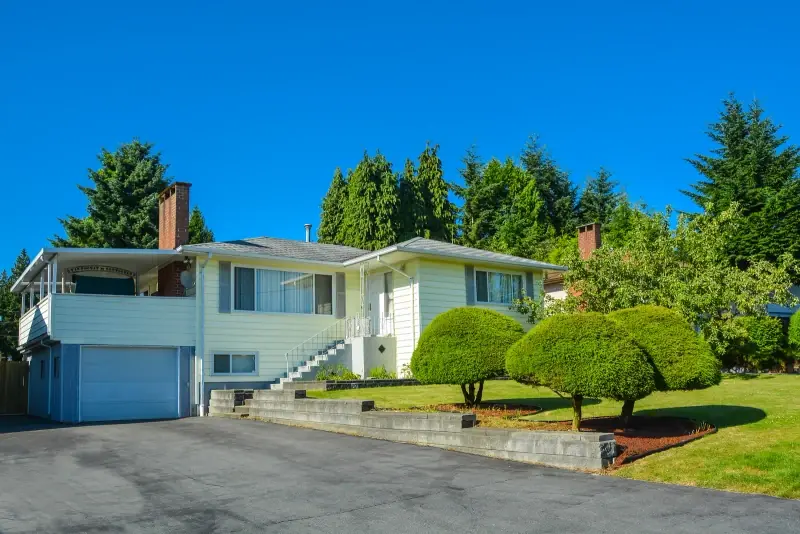
Most home loans written in California are conforming loans: conventional mortgages that fit the loan limits and underwriting rules set by Fannie Mae and Freddie Mac. Because the two agencies buy these loans after closing, nearly the whole lending market competes for them, and that competition is what keeps conventional pricing sharp.
Here is the part borrowers miss. The loan is standardized, but the lenders are not. Two lenders can price the same file differently on the same day, and one will approve a scenario the other declines.
I have been writing mortgages since 1985, and much of the job is shopping conforming lenders against each other. A bank hands you its own rate sheet and stops there. As a broker, I run one file past several lenders, and you pick the offer that fits.
What Are the Two Types of Conforming Loans in California?
How Do Standard and High-Balance Conforming Loans Compare in California?
The Federal Housing Finance Agency resets conforming loan limits every year, county by county, and California home prices push many of our counties above the national baseline. That gives the state two kinds of conforming loans instead of one.
Standard conforming covers loans up to $832,750, the 2026 FHFA baseline that applies in most California counties. The Central Valley, the far north, and much of inland California sit in this group, where homes under that price line remain common.
High-balance conforming, which Freddie Mac calls super conforming, covers loans above the baseline in counties FHFA designates as high-cost. The 2026 ceiling is $1,249,125, one and a half times the baseline and the most federal law allows, and it applies in the priciest counties in the state.
Both types run through the same Fannie Mae and Freddie Mac rulebook. Down payment rules match, credit rules match, and the borrower protections match. The real difference is the top loan amount your county allows, though high-balance pricing can run slightly higher because the loans trade differently once sold.
What Are the County Limits for Conforming Loans?
What Are California Conforming Loan Limit Zones in 2026?
FHFA publishes a limit for every county, and California really splits into three tiers rather than two. Knowing your tier is the first question in any conforming pre-approval, because it frames your budget before your income does.
Ceiling counties ($1,249,125). Ten California counties sit at the national ceiling: Alameda (Oakland, Fremont, Berkeley), Contra Costa (Walnut Creek, Concord, Richmond), Los Angeles, Marin, Orange County, San Benito, San Francisco, San Mateo, Santa Clara (San Jose), and Santa Cruz.
Mid-tier counties. San Diego, Napa, Sonoma, Ventura, Santa Barbara, San Luis Obispo, and Monterey each carry their own FHFA limit between the baseline and the ceiling. FHFA resets these from local median prices each year, so the exact figure moves. Buyers in these counties get more conforming room than the baseline suggests, just not the full ceiling.
Baseline counties ($832,750). Everywhere else, including Sacramento, Fresno, Kern (Bakersfield), San Joaquin (Stockton), Stanislaus, and Merced. The tier that surprises people is the Inland Empire: Riverside and San Bernardino counties stay at the baseline under FHFA’s current designations, despite years of price growth.
Buying a duplex, triplex, or fourplex changes the math again, because multi-unit properties carry higher limits. A two-unit property in a baseline county, for example, is conforming up to $1,066,000.
Check your county before you shop. FHFA posts the full table each year, and the designations above follow those published values, so verify the current figure for your county when you start looking.
Not sure which limit applies to you?
Tell us the county and the price range you're shopping. We'll tell you whether that's standard, high-balance, or jumbo territory, and what it means for your down payment.
Get a free assessment →Why Is A Good Lender Different for Conforming Loans?
What Lender Rate and Overlay Variations Affect Conforming Loans?
Every conforming loan follows the same agency guidelines, yet the lenders behind them differ in four ways that reach your wallet.
Pricing: lenders quote the same conforming file differently on the same day. Margins, appetite, and how much they want your loan type that month all move the number. The only way to know who is sharp this week is to ask more than one.
Overlays: an overlay is a lender’s own rule stacked on top of the agency minimums. One lender adds a credit floor, another wants extra reserves from self-employed borrowers. When that happens, the guidelines did not reject you. The overlay did, and a different lender may approve the same file.
Mortgage insurance: lenders place PMI through different insurance companies, and monthly premiums for the same borrower vary from company to company. So do the mechanics of removing coverage later. Most borrowers never see this choice being made for them, and it belongs in the comparison.
Speed: some lenders reliably close faster than others. In a competitive California escrow, a shorter closing timeline can be the reason a seller picks your offer over a higher one.
How Do Standard vs High-Balance Conforming Loans Compare?
Buying in Sacramento, Stockton, or Riverside? Standard conforming almost certainly covers it. Shopping in San Francisco, Palo Alto, or Newport Beach? You are in high-balance territory, and even that ceiling gets tested quickly at those prices.
The point people miss is that high-balance is still conforming. Fannie Mae and Freddie Mac stand behind it, the underwriting is the same, and the borrower protections are the same. It is not a jumbo loan, and it does not ask for jumbo-style reserves or paperwork.
What Are the Requirements for Conforming Loans?
What Credit Score Is Required?
- Credit: Fannie Mae and Freddie Mac no longer enforce a hard 620 minimum inside their automated underwriting systems, which now weigh the whole file instead. Manually underwritten loans still need 620, and many lenders keep their own floors. Pricing moves in credit tiers, so a stronger score keeps paying off even after approval.
- Down payment: 3% for first-time buyers and 5% for repeat buyers under Fannie and Freddie’s standard programs, and 20% down avoids PMI entirely. Conforming loans come as fixed-rate mortgages or adjustable-rate mortgages, with the same down payment rules either way.
- Debt-to-income: Fannie Mae’s Selling Guide allows automated approvals up to a 50% debt-to-income ratio. Files near the cap need offsetting strengths, such as reserves or a lower loan-to-value.
- Employment: two years of history is the standard ask. Changing jobs within the same field reads as career progression. A full career change gets a closer look from the underwriter.
- Reserves: requirements come from the automated underwriting findings and rise with risk. Primary residences often need none, while investment properties always need some cushion.
Income that does not fit the W-2 mold has its own paths. Self-employed borrowers can qualify through bank statement loans, CPA profit and loss documentation, or stock award income programs. Call (442) 245-5626 and we will map those options against your file.
Want to know where your file lands?
Send us your income, debts, and target county. We'll run the numbers the way an underwriter would and tell you what conforming financing supports, at no cost.
What Are Smart Strategies for Conforming Loans?
How Do You Optimize Rate Shopping and PMI for Conforming Loans?
Shop one file to several lenders. We submit the same scenario to multiple conforming lenders at once and put the quotes side by side. The spread between the strongest and weakest offer on identical terms is consistently worth the effort of asking.
Mind the mortgage insurance. With less than 20% down you will carry PMI, but federal law limits how long. The Homeowners Protection Act lets you request cancellation once you reach 20% equity based on the home’s original value, and requires the servicer to end coverage automatically when the balance amortizes to 78% of that value. Premiums also differ by insurer, which is one more reason lender choice matters.
Match the overlays. If your file has a wrinkle, the move is usually not to fix the wrinkle. It is to find the lender whose overlays do not care about it.
Balance speed against price. The sharpest quote is not always the fastest close. In a multiple-offer market, a lender who closes quickly can win you the house. In a slow market, take the better price and the longer timeline.
How Do Conforming Loans Compare to Other Loan Types?
Conforming vs FHA. HUD’s guidelines allow FHA loans down to a 580 credit score with 3.5% down, which makes FHA the more forgiving path for bruised credit. Conforming wins on insurance: there is no upfront mortgage insurance premium, and PMI is removable under the Homeowners Protection Act, while FHA coverage usually lasts the life of the loan at the minimum down payment.
Conforming vs VA. VA loans offer zero down and no monthly mortgage insurance, with eligibility limited to veterans, service members, and some surviving spouses. If you have VA entitlement, run that comparison before committing to anything conventional.
Conforming vs jumbo. Above your county’s limit, you have three paths. Raise the down payment until the loan fits under the limit, use high-balance conforming where your county allows it, or move to jumbo financing, which is private money with lender-set rules and typically stricter credit and reserve expectations. At California prices this decision comes up constantly, and the right answer depends on the whole file rather than the sticker price.
Ready to price your scenario?
Rod has been shopping conforming lenders against each other since 1985. One conversation and you'll know which path fits your county, your price, and your file.
What Is the Conforming Loan Process?
- Confirm your tier: your county and target price tell us whether the file is standard, high-balance, or jumbo.
- Shop lenders: one file, several quotes, compared side by side before you commit to anyone.
- Get pre-approved: automated underwriting returns findings quickly once your documents are in.
- Lock your rate: lock windows vary by lender, and we time yours to the escrow calendar.
- Underwriting: the file is verified against Fannie Mae or Freddie Mac guidelines.
- Close: purchase escrows commonly run 30 to 45 days from application to keys.
Why Do Conforming Loans Win in California?
Predictable: standardized guidelines mean fewer surprises between pre-approval and closing day.
Widely available: nearly the entire lending market competes for conforming loans, which is exactly what you want as the borrower.
Competitively priced: agency backing anchors conventional pricing, and shopping captures the spread between lenders.
Flexible: primary homes, second homes, and investment properties all fit, across single-family homes, condos, and multi-family properties up to four units.
Removable PMI: reach the equity thresholds and the insurance goes away. FHA’s usually does not.
What Are Common Myths About Conforming Loans?
“All conforming loans are the same.” The guidelines are the same, but the pricing, overlays, insurance placement, and turn times are not. Those differences are where the money changes hands.
“You need 20% down.” First-time buyers can put 3% down on a conforming loan. Twenty percent avoids PMI, but it has never been the entry price.
“High-balance is not really conforming.” It is backed by Fannie Mae and Freddie Mac the same way, just at the higher limits FHFA sets for expensive counties.
“Standardized means strict.” Automated underwriting weighs whole files, and compensating strengths genuinely move approvals. Standard is not the same as rigid.
What’s the Real Talk About California Conforming Loans?
Conforming loans are boring in a good way. The rules are predictable, the lender competition is deep, and the protections follow the loan wherever it gets sold.
California prices strain the category, which is exactly why the county tiers and the high-balance level exist. Most buyers here still fit under a conforming limit, and those who do get the deepest corner of the mortgage market working for them.
The real work is not qualifying. The real work is making lenders compete for a loan they all want. A bank shows you one quote, we show you several, and you choose. That difference is the whole reason brokers exist.
What’s the Bottom Line on Conforming Loans?
Conforming loans are not flashy, and that is their advantage. Standard or high-balance, a Central Valley starter home or a Bay Area property at the county ceiling, the machinery is proven and the market for your loan is deep.
Our job is matching your file to the conforming lender whose pricing, overlays, and timeline fit it. Already own your home? The same shopping logic applies to a conforming refinance. Call (442) 245-5626 to talk through your scenario, or compare the wider menu of purchase loan programs.
Explore More Purchase Options
Conforming is the default, not the only door. FHA trades a smaller credit ask for costlier insurance, VA removes the down payment for those who served, jumbo picks up where county limits stop, and USDA covers eligible rural areas. Our California loan programs page lays them out side by side so you can see what each tradeoff costs.