




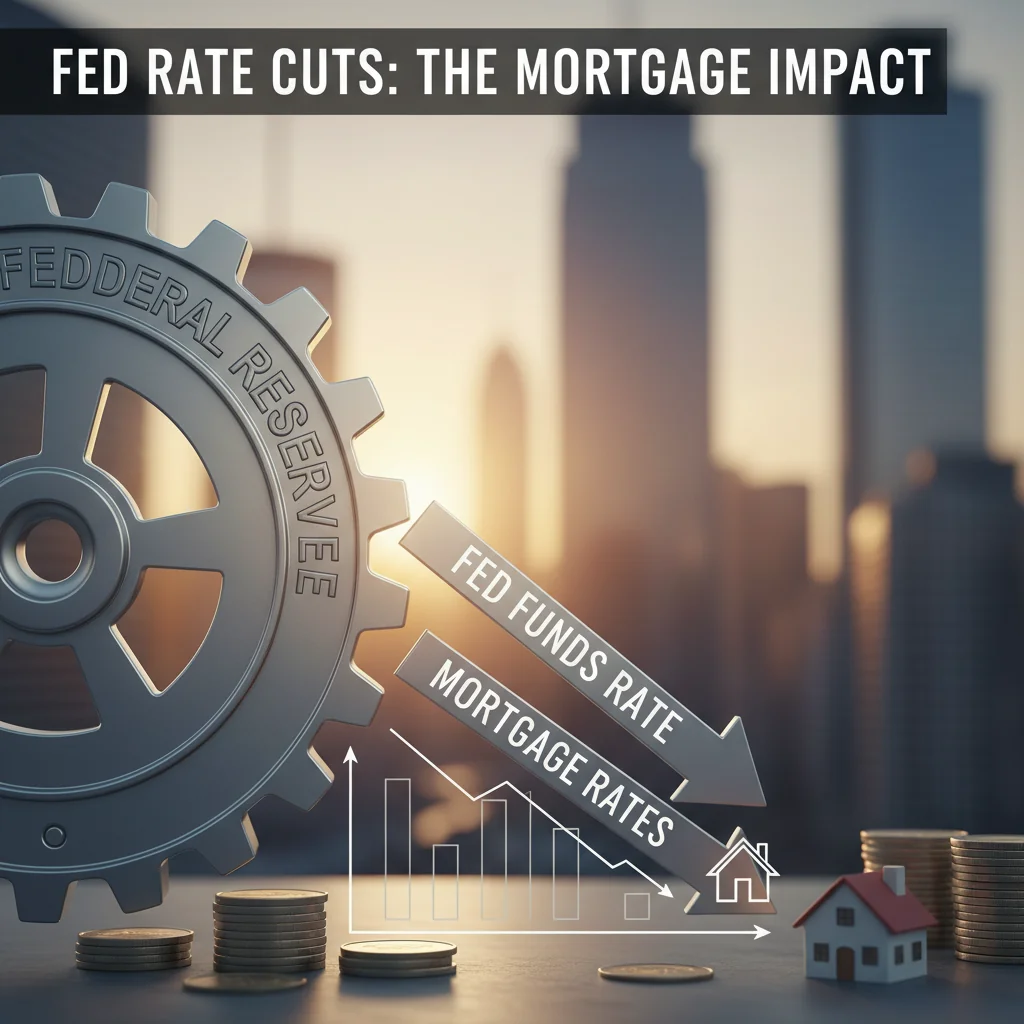
The honest answer after 40 years financing California mortgages: You might see 0.125% to 0.25% improvement over the next 60-90 days. That’s it. And it won’t come from the Fed’s 0.25% rate cut. It’ll come from the $40 billion Treasury bill purchase program starting this Friday, December 13, 2025.
Here’s when California mortgage rates might improve, why the Treasury purchase matters more than the Fed cut, and whether you should wait or buy now.
When California Mortgage Rates Will Improve
The Fed cut rates 0.25% to 3.5-3.75% on December 10. More importantly, they announced $40 billion in Treasury bill purchases starting December 13, which actually affects your mortgage rate.
The Fed said purchases will “remain elevated for a few months” before tapering. Translation: Heavy buying through Q1 2026, then declining impact.
December 13-31: Minimal movement as markets price in the program. Maybe 5-10 basis points if you’re lucky.
January-February 2026: Best window. Full purchase volume hits the market. You might see 0.125-0.25% improvement from today’s rates.
March onward: Fed starts tapering. Effect diminishes.
If you’re buying in expensive markets like San Francisco, Palo Alto, Los Angeles, Newport Beach, or La Jolla with jumbo loans above $1.15 million, spreads tighten faster during Treasury purchases. On a $2 million Bay Area purchase, every 0.25% saves roughly $400 monthly.
For conforming loan buyers in Sacramento, Fresno, or the Inland Empire under $832,750, you’re already getting better rates than coastal jumbo buyers. Your rates move on the same MBS pricing, but lower loan amounts mean better execution from the start.
Why the $40 Billion Treasury Purchase Matters More Than the Fed Cut
Your mortgage rate doesn’t come from the Fed funds rate. It comes from the secondary market where lenders sell your loan after closing. Investors buy mortgage-backed securities (MBS). MBS yields determine what rates we can offer.
Here’s how Treasury purchases affect your rate:
- Fed buys Treasury bills → Removes supply from the market
- Treasury yields drop → Bond investors look for better returns
- MBS become more attractive → Investor demand for mortgages increases
- MBS prices rise, yields fall → Lenders can offer you lower rates
The mortgage industry watches MBS prices in real time. Every morning, we get rate sheets based on overnight MBS trading. After Powell’s announcement on December 10, here’s what happened:
Bay Area and Southern California jumbo loans ($1.15M+): 6.25-6.40% depending on loan size and location. Spreads narrowed about 10 basis points.
Sacramento and Inland Empire conforming (under $832,750): 6.25-6.30% for 740+ credit with 20% down.
High-balance conforming in Oakland, Glendale, Costa Mesa ($832,751-$1,249,125): 6.30-6.35%
The 10-year Treasury yield dropped to 4.15%. MBS spreads tightened modestly. Not dramatic, but real. And the $40 billion purchase program hasn’t even started yet.
This isn’t quantitative easing. During the COVID crisis, the Fed bought $80-120 billion per month for years, pushing mortgage rates to 3%. This is $40 billion total over several months. It’ll help. It’s not a game changer.
Need Help with Your California Mortgage?
Whether you're buying, refinancing, or tapping equity, we've got 40 years of experience finding the right loan for your situation.
Prime Rate Drops to 6.75%: HELOC and ARM Borrowers
With the Fed funds rate now at 3.5-3.75%, the prime rate dropped to 6.75% effective December 11, 2025. This immediately affects HELOCs and ARM adjustment indices.
HELOC Borrowers: Your Savings
Home equity lines adjust immediately when prime drops. Here’s what you saved:
| HELOC Balance | Monthly Savings |
|---|---|
| $250,000 | $52/month |
| $500,000 | $104/month |
| $750,000 | $156/month |
| $1,000,000 | $208/month |
Most HELOC rates are prime plus a margin (typically 0-3%). With prime at 6.75%, your HELOC now runs 6.75% to 9.75% depending on your margin.
Check your January 2026 statement to confirm the adjustment. If you’re carrying a large balance long-term, consider converting to a fixed-rate home equity refinance before the Fed pauses cuts.
ARM Borrowers
Adjustable-rate mortgages (ARMs) don’t adjust immediately. Your rate changes only at your scheduled adjustment date (annually after the fixed period ends). If you’re approaching your adjustment, you’ll benefit. If your ARM just adjusted, you won’t see the drop until next year.
Should You Wait or Lock Your Rate Now?
Fed Chair Powell signaled they’re done cutting aggressively. The dot plot projects only one more 0.25% cut in 2026. Translation: Don’t wait for 5% rates. They’re not coming.
After 40 years financing California homes, here’s the reality: The $40B Treasury purchase might move your rate 0.125-0.25% over the next 60-90 days. That’s your window.
If You’re Buying in Expensive Markets
Bay Area, Los Angeles, Orange County, San Diego jumbo loan buyers: The next 60-90 days could offer your best rates in 2026. Jumbo spreads tighten first when Treasury purchases ramp up.
On a $750,000 California home purchase with 20% down, a drop from 6.50% to 6.25% saves $102 monthly. But while you wait 6-12 months for that marginal improvement, you’re paying rent instead of building equity and California homes are appreciating 4-6% annually.
Sacramento, Inland Empire, Central Valley conforming buyers: You’re already getting better execution than coastal markets. Waiting 6 months for 0.125% while missing appreciation is a losing strategy.
The right house at 6.5% beats missing out while trying to time a quarter-point rate drop.
If You’re Refinancing
You need at least 0.75-1.00% rate improvement to justify refinance costs. With only one more 0.25% Fed cut projected, rates aren’t dropping enough for most borrowers.
Refinancing makes sense if:
- You’re at 7%+ from 2022-2023 and can get 6.25% now
- You’re doing a cash-out refinance for debt consolidation
- You’re switching from an ARM to fixed-rate for stability
- You’re removing PMI after building equity
Current California Mortgage Rates
- 30-year fixed: 6.25-6.75% depending on credit and down payment
- 15-year fixed: 5.75-6.25%
- 5/1 ARM: 6.00-6.50%
- Jumbo loans: 6.25-6.75% (comparable to conforming)
Key Takeaways
When California mortgage rates will improve: January-February 2026 offers the best window for 0.125-0.25% improvement as the $40B Treasury purchase program hits full volume.
The $40B Treasury purchase matters more than the Fed cut. MBS pricing determines your mortgage rate, not the Fed funds rate. Treasury purchases tighten MBS spreads.
Prime rate dropped to 6.75%. HELOC borrowers save immediately. ARM borrowers benefit at their next adjustment date.
Only one more Fed cut projected for 2026. Stop waiting for 5% rates. They’re not coming.
Geography matters. Jumbo buyers in San Francisco, Los Angeles, and San Diego see spreads tighten faster. Sacramento and Inland Empire conforming buyers already get better execution.
The right house at 6.5% beats missing out waiting for 6.25%. California homes appreciate 4-6% annually. Trying to time a quarter-point rate drop while missing equity building and appreciation is a losing strategy.
Forty years financing California homes teaches one truth: The best time to buy the right house is when you find it. The “perfect” interest rate never comes.
Frequently Asked Questions
When will California mortgage rates drop in 2025-2026?
California mortgage rates may improve 0.125% to 0.25% over the next 60-90 days, with January-February 2026 offering the best window. This improvement comes from the Fed's $40 billion Treasury bill purchase program starting December 13, 2025, not the 0.25% Fed funds rate cut itself. Current 30-year fixed rates range from 6.25-6.75% depending on credit score, down payment, and loan amount.
Should I wait for lower mortgage rates or buy a house now in California?
The right house at 6.5% beats waiting for 6.25%. While you wait 6-12 months hoping for a 0.125-0.25% rate drop, you're paying rent instead of building equity, and California homes are appreciating 4-6% annually. On a $750,000 home purchase, missing $30,000-$45,000 in appreciation to save $102/month from a quarter-point rate drop is a losing financial strategy. Only one more 0.25% Fed cut is projected for 2026, so 5% rates aren't coming back.
How does the Federal Reserve rate cut affect mortgage rates?
The Fed funds rate doesn't directly set mortgage rates. Your mortgage rate comes from mortgage-backed securities (MBS) pricing in the secondary market. The $40 billion Treasury purchase matters more than the Fed cut because when the Fed buys Treasury bills, it removes supply from the market, causing Treasury yields to drop. This makes MBS more attractive to bond investors, driving up MBS prices and lowering yields, which allows lenders to offer you better mortgage rates.
What mortgage rate can I get in California right now in December 2025?
Current California mortgage rates as of December 2025: 30-year fixed at 6.25-6.75%, 15-year fixed at 5.75-6.25%, and 5/1 ARMs at 6.00-6.50%. For jumbo loans above $1.25 million in Bay Area and Southern California, rates are 6.25-6.40%. For conforming loans under $832,750 in Sacramento and Inland Empire, rates are 6.25-6.30% with 740+ credit and 20% down. High-balance conforming loans ($832,751-$1,249,125) in Oakland, Glendale, and Costa Mesa are 6.30-6.35%.
How does the Fed rate cut affect my HELOC or ARM in California?
The prime rate dropped to 6.75% effective December 11, 2025. HELOCs adjust immediately when prime drops - a $500,000 HELOC saves $104/month. Most HELOC rates are prime plus 0-3%, so your rate now runs 6.75% to 9.75% depending on your margin. Adjustable-rate mortgages (ARMs) don't adjust immediately - your rate only changes at your scheduled adjustment date after the fixed period ends. If you're approaching your adjustment, you'll benefit. If your ARM just adjusted, you won't see the drop until next year.
Got questions about how this affects your situation? Call (442) 245-5626 or get pre-approved at today’s rates.